
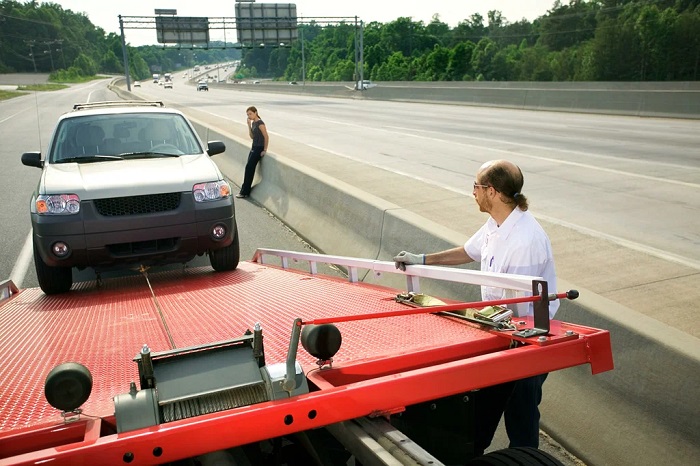
Vehicle towing is a complex process for the safe loading, securing, and transport of a vehicle. It is used in the event of breakdowns, accidents, parking violations, or the need to transport the vehicle to a service center. It is important to consider the drive type, ground clearance, condition of the steering and braking system, as well as the presence of wheel locks or suspension damage, to select the appropriate loading method and eliminate additional risks.
Before calling the service, confirm the address and landmarks, the make and weight of the vehicle, the nature of the problem, the vehicle’s ability to roll, and the condition of the wheels. Also, prepare documents and ensure access to the loading area. Useful information about vehicle towing is available on the website, where you can check transportation requirements, a list of application details, and basic recommendations for interacting with a tow truck in advance.
When is forced removal of a vehicle to a designated parking lot permitted?
Forced removal of a vehicle to a designated parking lot is permitted when the vehicle’s presence on the road or in a parking lot poses a safety hazard, significantly impedes traffic, or is related to an offense for which the law expressly permits vehicle detention. In practice, this is a security measure in an administrative offense case: the vehicle is temporarily seized from the owner’s possession until the cause of the detention is resolved or until a decision is made on the case.
The grounds and procedure for towing depend on the provisions of the Code of Administrative Offenses of the Russian Federation and regional regulations for the organization of movement and storage. Even if there is a formal reason, the official retains the obligation to act proportionately: record the violation, prepare documents, and choose the measure necessary to stop the violation, rather than “punish” the owner.
Grounds, Limitations, and Exceptions
Typical grounds include cases where continuing to drive or remaining in the same place is unacceptable without correcting the violation. For example, in cases of improper stopping/parking in places where it significantly impedes passage, in cases of intoxicated driving or unlicensed driving, as well as in other situations where the law provides for the detention of a vehicle. It is important that the violation be confirmed: by photographs and video footage, testimony, a report, and the official’s notes.
Limitations are related to the principle of necessity and procedure. Towing should not be used if the violation can be stopped on the spot by other means (for example, the driver is present and can immediately move the vehicle), or if detention would be clearly disproportionate to the specific situation. When registering, they must specify the location, time, and reason for the detention, along with information about the vehicle and the person making the decision. An inventory of visible damage and any property inside the vehicle is often required to avoid disputes about its safety.
Exceptions and situations in which relocation to a designated parking lot is generally unacceptable or should be terminated most often involve eliminating the cause of the detention before the start of the move. If the driver arrives before loading and is prepared to immediately stop the violation (move the vehicle, provide documents, and ensure a sober and licensed driver), the grounds for towing may be eliminated. Circumstances under which the move would create additional risk (for example, the nature of the cargo or its technical condition requiring specialized equipment) are also taken into account. In such cases, measures must ensure safety and minimize harm.
- The basis must be legal and provable: a verbal instruction alone is not enough; procedural documents and records are required.
- The measure must be necessary: if the problem can be resolved on the spot, the towing may be deemed unjustified.
- The reason for the detention is eliminated – the detention ends: once the conditions for ending the vehicle’s detention are met, it must be released in accordance with the established procedure.
What is important for the owner to remember in disputed towings
If you believe the towing was unjustified, it makes sense to keep copies of all documents, document the location and road signs with photos/video, and include comments in the reports (including disagreement, the absence of an obstruction to traffic, and the possibility of moving the vehicle). If there is any damage, document it immediately upon receipt of the vehicle, as this will impact subsequent claims for compensation.
When appealing, the key factors are: the presence or absence of an actual obstruction, the correctness of the paperwork, the start of the move (loading), and whether it was possible to immediately correct the violation without towing. The more accurate the evidence, the higher the chance of having the forced removal to a special parking lot declared illegal and disputing the associated costs.