
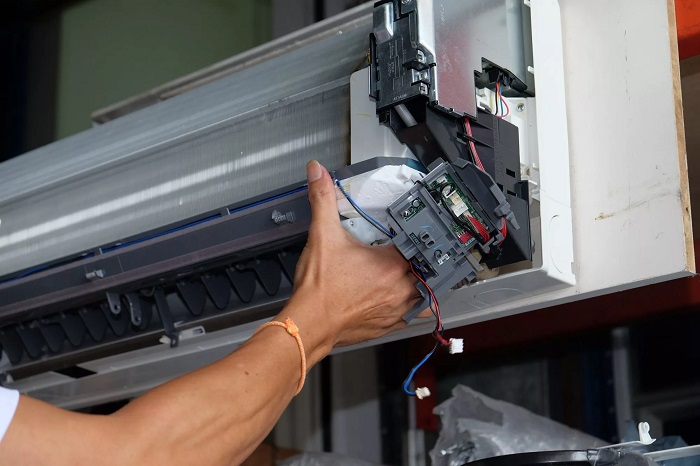
A split system operates at the interface between the electronics and the refrigeration circuit: the compressor, fans, sensors, control board, heat exchangers, and drainage must be in good working order simultaneously. Therefore, a “minor” malfunction like a dirty filter can lead to freezing, compressor overload, and a safety shutdown.
HVAC repair begins with a basic diagnosis: checking the power supply and error indicators, visual inspection of the units, assessing the inlet/outlet temperatures, the condition of the filters and heat exchangers, drainage, fan speed, and refrigerant parameters. Below are the most common breakdowns and practical ways to fix them.
Troubleshooting: What You Can Do Yourself and When You Need a Professional
- Clean the indoor unit filters (usually every 2-4 weeks during the season): rinse with warm water, dry, and reinstall.
- Carefully clean the indoor unit heat exchanger to remove dust (without deforming the fins). If heavily soiled, call a service technician for a cleaning.
- Check the drainage: check for kinks, loops, or blockages; Drainage should be free.
- Check the outdoor unit: air access, absence of debris and ice, integrity of the grille and fasteners.
Symptoms that require a specialist
- Burning smell, sparking, circuit breaker tripping, hot plug/socket.
- Strong vibration, metallic sounds, grinding, intermittent compressor stops.
- Constant freezing despite clean filters and normal airflow.
- Suspected leak: worsening cold, frost on connections, pressure/temperature errors.
- Errors on the display or flashing indicators – deciphering and checking the sensors/board is required.
How does a professional service work? Repair
- Diagnostics: inspection, code reading, power check, fan, sensor, and board testing.
- Tightness and refrigerant parameter testing: leak detection, vacuuming, and refilling using scales.
- Heat exchanger service: indoor/outdoor unit cleaning, treatment to remove contaminants and biofilms.
- Component repair: condenser, fan motor, sensor, and drain pump replacement (if applicable), contact restoration.
- Test run: checking temperatures, currents, noise, drainage, and operating modes.
Important: any work with refrigerant, line soldering, vacuuming, and electronic intervention are classified as professional HVAC repairs and require tools and skills.
Prevention is the cheapest “repair”: regular cleaning Filters, timely cleaning of heat exchangers, drainage monitoring, and the absence of airflow obstructions significantly reduce the risk of leaks, freezing, and compressor overload.
Troubleshooting by symptoms: noise, vibration, odor, error indications
Start your diagnostics with the simple: check the filters, the condition of the heat exchangers, free airflow, power supply, and remote control/batteries, as well as a visual inspection of the air duct and drainage. If there are signs of a short circuit, a burning smell, sparking, frozen lines, or a tripped circuit breaker, stop operation and proceed to a safe inspection or call a specialist.
Symptom > Probable Causes > What to Check
Self-Test Procedure
- Turn off the power, wait until the fans stop.
- Inspect and clean the filters, check for free air flow.
- Check the drainage: there are no leaks, a damp smell, or overflow from the pan.
- Inspect the unit mounts and brackets, eliminate any rattling or contact with the line.
- Check the error code against the manual and perform the recommended basic steps (restart, check the power).
When is service diagnostics needed?
- There is a burning smell, the circuit breaker trips, There is sparking or signs of melting.
- Sensor/communication errors are consistently occurring after a restart.
- There is icing, poor cooling/heating with clean filters, suspected refrigerant leak.
- A loud metallic knocking sound, compressor hum, increased vibration in the outdoor unit.
Bottom line: symptom-based diagnostics boil down to the “symptom > simple checks > solution” chain. Most often, problems are resolved by cleaning, restoring drainage, and tightening fasteners, while error codes help quickly isolate the component. Anything related to electrical systems, the compressor, and the refrigerant requires professional repair and adherence to safety precautions.