
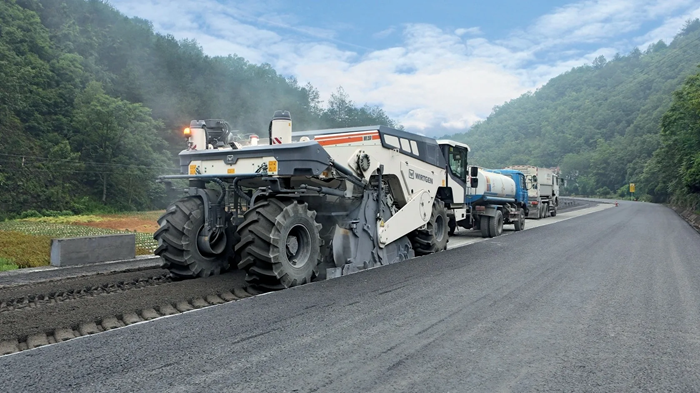
Soil stabilization is a key step in preparing the foundation for road, site, and foundation construction. It helps increase load-bearing capacity, reduce subsidence, and protect the surface from damage under load and moisture.
This article will cover the basic rules: how to assess the condition of the foundation, select the appropriate stabilization method, and avoid common mistakes during the work.
Practical tips include checking moisture content and particle size distribution, correctly selecting binders and additives, following mixing and compaction techniques, and quality control at every stage. More information on PolyJet about soil stabilization
When to Conduct a Foundation Inspection Before Stabilization
A foundation inspection is performed before selecting a soil stabilization technique to accurately determine the causes of deformations and the boundaries of the problem area. Without diagnostics, stabilization may be “pinpoint” and fail to address the source of subsidence, loose soil, or excessive moisture.
It’s especially important to schedule an inspection if the site already shows signs of trouble: cracks in the walls and pavement, warped openings, subsidence in the floor, localized sinkholes, persistent puddles near the foundation, or soil heaving during frost. The sooner the initial condition of the foundation is recorded, the easier it is to compare the results and evaluate the effectiveness of further measures.
An inspection is required in the following cases:
- before strengthening an existing foundation and during reconstruction/addition, when the load on the base increases;
- if the water regime of the site changes: new drainage, utility leaks, rising groundwater levels, stormwater redesign;
- if the soils are potentially complex: peatlands, fill layers, silty sands, loess-like soils, clays with the risk of frost heaving;
- when deformations develop rapidly (over weeks/months) or have a “stepwise” nature after rains/thaws;
- if new cracks appear after repairs or partial reinforcement have already been completed.
How to conduct a foundation inspection: sequence and key methods
- Collection of initial data: design and as-built documentation (if any), information on backfill and Layouts, repair history, seasonality of occurrence, drainage and utility data.
- Visual inspection and defect recording: crack and deformation map, reference to building axes/corners, assessment of the condition of the blind area, basement, drainage, and potential leak points. It is advisable to install beacons for cracks and monitor the crack opening dynamics.
- Geometry check: leveling the floor and blind area, measuring tilts, deflections, and differences in elevation. This helps to understand where subsidence is localized and where the entire contour is affected.
- Engineering and geological work: foundation pits and/or drilling boreholes in the deformation zone and in the “control” area. The objective is to determine the thickness of weak layers, the depth of emplacement, the actual condition of the base, and the presence of loose or water-saturated layers.
- Sampling and laboratory testing: determination of moisture content, density, particle size distribution, plastic limits, strength, and compressibility. Based on the results, the bearing capacity and settlement forecast are refined.
- Hydrogeological assessment: groundwater level measurements (dynamic, if necessary), identification of perched water, inspection of drainage systems, storm sewers, and potential leak locations. Water factors are often the primary cause of loss of bearing capacity.
- Instrumental monitoring and foundation diagnostics: in complex cases, static/dynamic sounding, geophysical methods, and controlled stamp testing are used. This clarifies the boundaries of the weakening and the inhomogeneity of the compaction.
Important: The survey is carried out so as to cover not only the location of the visible defect, but also the probable “causal” zone (water-bearing lenses, fill areas, utility trenches). If in doubt, it is preferable to expand the excavation and observation program rather than blindly reinforce the foundation.